
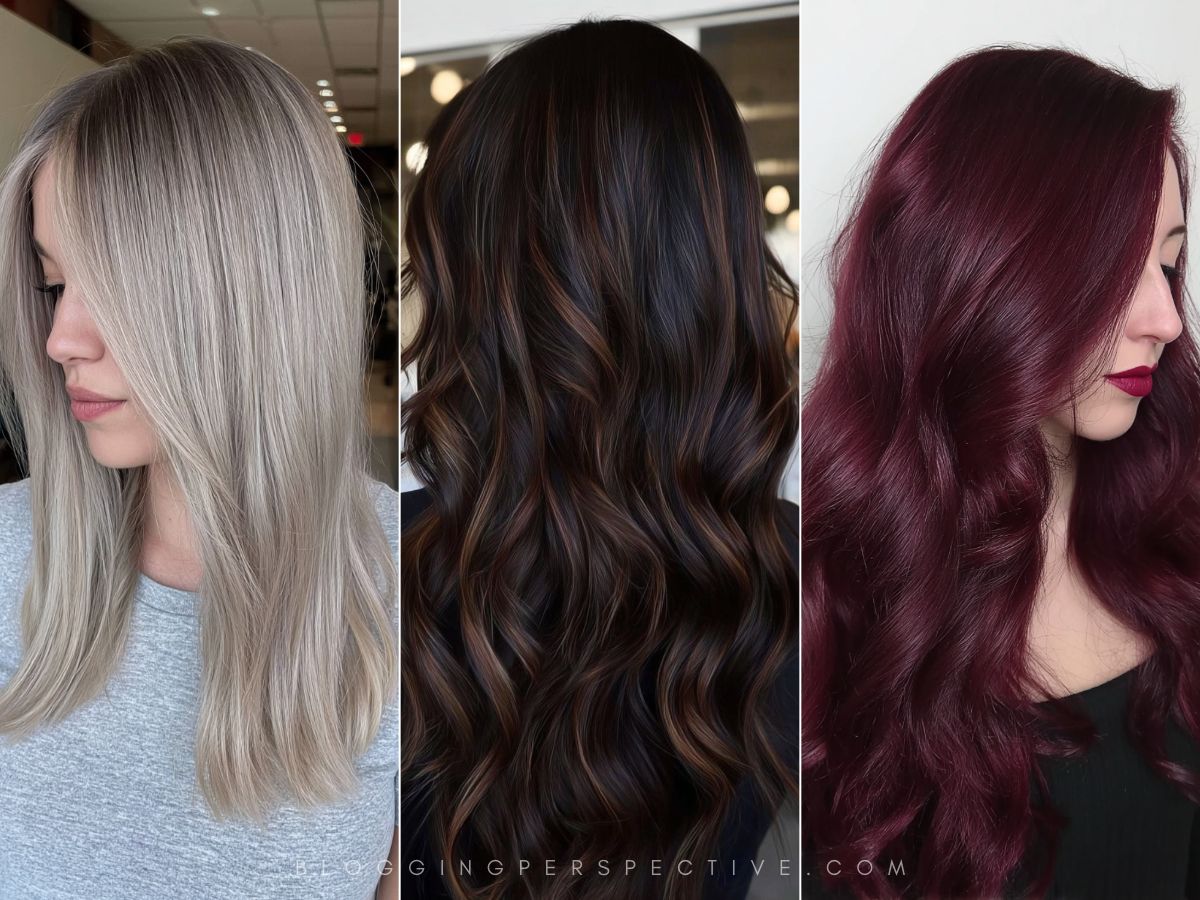
When I think about trending winter hair colors, I want richness, dimension, and a finish that looks pretty whether my hair is waved or tucked into a sweater. That can mean a deep espresso brunette, a softly golden blonde, or a berry red that catches the light.
A winter refresh doesn’t have to mean going darker, either – sometimes a few well-placed highlights or a change in tone makes all the difference.
I’ve put together this winter color edit with options for a small update and a proper change of mood. I’ll walk you through what makes each shade different, what to ask for, and the upkeep worth thinking about before you book.
The name is a starting point, but the actual color and placement matter much more than the label.
Rich & Glossy Brunettes
Dark-Roast Espresso
This is the brunette I’d choose for depth without a completely flat, jet-black finish. Dark-roast espresso sits close to black, but a little chocolate warmth shows through when the light hits it. That subtle brown reflection keeps the color looking rich rather than inky.
Ask for a very deep brown with enough tonal softness to see some dimension, especially around the face. If you already have a dark base, a carefully chosen tinted gloss may be enough to refresh the tone. Going this dark from blonde is a bigger change and may need warm pigment added back first so the result doesn’t look hollow or muddy.
I wouldn’t choose it only because it sounds low-maintenance. Lighter roots can show quickly against espresso, so discuss whether you want an all-over result or a softer transition at the scalp.
Frosted Hazelnut
Frosted hazelnut is my pick for a lighter brunette that feels bright without becoming blonde. Think creamy light brown with very fine, low-contrast highlights and a cool-neutral finish. The softness matters here – obvious pale stripes would change the whole look.
I’d ask for delicate brightness through the front and upper layers, with plenty of brown left between the lighter pieces. A neutral-to-cool gloss can refine the tone, but it won’t turn a dark base lighter by itself. Those brighter ribbons may need lightening before they’re toned.
Keep a little beige in the finish rather than asking for the grayest brown possible. That balance gives the shade its creamy quality, and a blended root can make the grow-out less noticeable than traditional highlights.
Mocha Gourmand
Mocha gourmand brings together a medium-to-dark brown base and tiny touches of cocoa, cinnamon, and toffee. I like this one when a solid brunette feels a little too uniform, but a strong balayage feels like too much. The variation should be something you notice as the hair moves, not a separate highlight pattern.
Ask for fine babylights, meaning very small highlighted sections, in tones only a little lighter or warmer than your base. Keeping the contrast gentle helps the color look blended on both straight hair and loose waves. Cinnamon here is a hint of warmth, not a request for bright copper.
The upkeep depends on how far those lighter pieces are lifted. I’d keep the brightness restrained if you want the option to let the highlights grow out softly between appointments.
Maple Brunette
Maple brunette has a chestnut base with fine amber-brown ribbons woven through it. It’s warmer than espresso and less golden than a caramel-heavy brunette. To me, it’s a lovely middle ground when you want a little copper feeling without committing to an obvious red.
I’d ask for warmth that reads brown first, with the amber showing more clearly in daylight. A tinted gloss may shift an existing brunette toward this mood, while visible ribbons can require separate color placement. Your starting shade determines how much change a gloss alone can make.
If you dislike orange reflections, show your colorist exactly how warm is too warm. Maple should still feel chestnut and dimensional, and a warmer finish will need refreshing as it fades.
Caramel Ribbon Brunette
This is the most noticeably highlighted brunette in the group, with caramel pieces winding through a dark brown base. I like the brightness around the face, but I’d carry some of it through the lengths so the front doesn’t look disconnected. The dark sections are just as important as the caramel because they give the lighter pieces contrast.
Ask for ribbons rather than a solid blonde panel, and choose where the brightness should begin. Starting some pieces lower can create a softer grow-out than bringing every highlight right to the scalp. On curls, placement should follow the sections you actually see when your hair settles naturally.
A warmer caramel can still need toner refreshes after lightening. I’d make the consultation specific rather than simply asking for caramel highlights.
- Decide how bold you want the face-framing pieces to look.
- Keep enough dark hair between the ribbons for contrast.
- Show the colorist how you normally part and style your hair.
Cozy & Luminous Blondes
Champagne Blonde
Champagne blonde is a soft beige with a little golden shimmer, not a bright yellow-gold or a flat silver. I like it when blonde needs to feel slightly warmer and gentler without looking heavily honey-colored. The finish should stay light and clear, with just enough warmth to keep it luminous.
If you’re already blonde, a tonal adjustment may get you close without adding lots of new highlights. Ask for a beige-gold balance and explain whether you prefer the result more creamy or more neutral. A photo helps because champagne can mean quite different things at different salons.
Darker starting hair will usually need lightening to reach this softness. I’d also discuss a subtle root blend if a bright blonde line at the scalp isn’t the upkeep you want.
Cashmere Blonde
What I like about cashmere blonde is the lack of one obvious, all-over tone. Creamy beige, pale gold, and slightly deeper blonde pieces sit together in a softly blended finish. It looks dimensional without needing a very dark root or dramatic light-and-dark stripes.
Ask for fine variation through the lengths rather than a single pale shade from root to tip. On already highlighted hair, a few carefully placed lowlights and a gloss may help create that softness. Lowlights add deeper color, so they need to be chosen with your existing blonde in mind rather than scattered everywhere.
Teddy Bear Blonde
Teddy bear blonde is warmer and deeper than champagne or cashmere, with caramel, toffee, and honey sitting over a slightly darker root. It’s the blonde I’d consider if very pale highlights feel a little too stark. The overall result should look golden and dimensional, not like dark roots with disconnected yellow ends.
Ask for a smooth transition into the lighter lengths and a mix of warm shades instead of one uniform gold. Existing blonde may need some depth added back, while brunette hair may need highlights to create the lighter pieces. Either way, preserve enough variation for the color to look soft when worn straight.
A deeper root can ease visible grow-out, but it doesn’t stop the lengths from changing tone. I’d keep the honey brightness intentional and ask how to maintain it without overcooling the whole color.
Buttery Blonde
Buttery blonde is a clearer golden blonde, with natural-looking roots and subtle lowlights keeping the finish from looking one-dimensional. I love it with loose waves because the lighter gold catches on each bend. It can look beautiful across different skin tones, so I wouldn’t treat warmth as something reserved for one complexion.
I’d ask for a creamy golden finish, not a strongly yellow one, and use photos to show that difference. Balayage can place the brightness away from the scalp, while a few deeper pieces help connect the root to the ends. If your blonde is already very pale, the change may be more about adding tone than adding lightness.
Icy Beige
Icy beige gives you that pale, frosted finish without asking for a completely gray or white blonde. There should still be a little beige softness beneath the coolness. I’d choose this when you like crisp blonde but don’t want the lengths to look overly violet or silvery.
The pale starting level is what makes this shade possible. A pearl or violet-based toner may help on suitable lightened hair, but toner isn’t a shortcut from dark hair to icy blonde. The formula needs to match the warmth actually present, rather than simply using more purple.
This is one of the bigger upkeep commitments in the list, especially if your natural base is dark. Discuss a softer root and realistic appointment needs before deciding that the inspiration photo is your everyday goal.
Dark Nude Blonde
Dark nude blonde sits near the border between light brown and dark blonde, with a cool-neutral, understated finish. It has less obvious gold than teddy bear blonde and much less brightness than icy beige. I like it for a subtle refresh that still leaves the hair looking softly dimensional.
Ask for the depth you want first, then discuss the balance of beige and coolness. A colorist can keep it from looking overly warm without pushing it into a dull gray-brown. On pale blonde, creating this shade may involve adding depth back through the lengths.
It can be easier to maintain when it sits close to your natural base, but it won’t permanently eliminate brassiness. Previously colored dark hair may need more work to reach it than the soft finished shade suggests.
Dimensional Brondes
Mink Bronde
Mink bronde keeps a rich brunette base and lets diffused honey-beige highlights catch through it. Bronde simply means a blend of brown and blonde, and this version leans softer rather than boldly striped. I like the balance of beige and gentle warmth when neither a very cool brunette nor a golden blonde feels quite right.
Ask for the highlights to melt into the base, with most of the brightness placed where it shows through your usual style. That might be around the face and surface on straight hair, or through selected curl sections on textured hair. The goal is a blended transition, not every strand becoming lighter.
Velvet Reds & Burnished Coppers
Wintery Wine
Wintery wine is a deep burgundy with a plum lean, dark enough to feel understated indoors and more berry-toned in brighter light. I like it when red needs to feel moody rather than coppery. The brown depth underneath is what keeps it from reading as a vivid purple all over.
Ask for a brunette-based burgundy and show how much plum reflection you want. On darker hair, the result may be a subtle tonal shift rather than the brighter wine shade in a lightened inspiration photo. A tinted formula can add reflection, but it won’t necessarily make a dark base lighter.
Expect the berry tone to change as it fades. Red and violet pigments can also linger in previously lightened hair, so I’d discuss your longer-term color plans before treating this as a quick seasonal experiment.
Cranberry Velvet
Cranberry velvet is the bolder berry option, with a saturated red finish and a cool violet edge. It feels brighter and more obviously red than wintery wine. I’d wear it all over for a statement, or melt it into a dark base when I wanted to keep more depth at the root.
The color’s starting canvas matters just as much as the formula. A dark base may show a quieter red reflection, while a lighter base can give you more saturation. Ask whether the photo you’re saving would require lightening before the berry color goes on.
This isn’t a shade I’d choose while hoping to forget about color appointments. Plan for fading, refreshing the lengths, and the possibility that the red won’t wash out as neatly as you expect.
- Decide whether you want a subtle reflection or a clearly visible berry red.
- Discuss how the shade may fade on your current color.
- Mention any plans to return to blonde before committing.
Cherry Chocolate
Cherry chocolate keeps the espresso depth of a brunette and adds dark-cherry reflections instead of a bright red surface. I like that you can keep a mostly brown impression and still see something different when the hair catches the light. It’s less plum-heavy than wintery wine and less saturated than cranberry velvet.
I’d ask for a brown-first result, with cherry showing as a reflection rather than a separate highlight color. If your base is already dark, a tinted gloss may create the right subtle effect. A brighter cherry result is a different request and can involve more preparation.
Be clear about what you don’t want as well – burgundy, copper, and vivid red can all feel very different. The cherry tone will need refreshing if you want it to stay noticeable, even when the base itself grows out gently.
Bropper (Brown-Copper)
Bropper blends brunette depth with copper warmth, and the brown should still be easy to see. It’s the option I’d consider when a full copper feels too bright but maple brunette isn’t warm enough. The result can be subtle or fairly noticeable depending on how much copper you add.
Ask for a brown-copper balance that suits your starting shade, rather than assuming the name describes one exact formula. On some brunettes, a warm tonal change may be enough; on others, creating lighter copper pieces will need lightening. I’d keep a photo of the desired depth alongside the photo of the desired warmth.
Muted Peach-Apricot
Muted peach-apricot is the softest warm shade in this group: a sheer copper-gold tone over a beige-blonde base. It should feel creamy and lightly peachy, not like a solid orange dye. I love it as an idea for blonde that needs a change in mood without a dramatic shift in depth.
Ask for a translucent-looking finish and keep the reference photo close to the lightness of your current hair. This effect is easiest to see on a sufficiently light base; a gloss won’t turn a darker brunette into pale apricot. The beige underneath helps keep the warmth delicate.
Even a sheer tint can stain porous blonde, so don’t assume it’ll disappear after a couple of washes. I’d discuss a small test section and what returning to your usual blonde could involve before committing to the whole head.
Natural & Editorial Statement Shades
Glossy Silver-Gray
Glossy silver-gray is about letting natural silver streaks or salt-and-pepper growth look deliberate, rather than automatically covering them. I like the contrast between the darker strands and bright silver when the finish is smooth and reflective. You don’t need every strand to become the same gray for the result to look polished.
A clear gloss may be an option when you want shine without intentionally adding color. If warmth or yellowing needs addressing, a carefully selected tinted formula may help, but it can also alter or darken the silver. I’d ask to see the effect on a test section rather than requesting a silver gloss without discussing what it will deposit.
Naturally silver hair and hair lightened to an editorial silver are different color projects. Creating silver from a dark base can require substantial lightening and more upkeep, so be clear about which version you’re saving.
Getting the Color You Actually Want
I would take two or three photos showing a similar depth and tone, rather than a whole folder of unrelated colors. Show your hair in its normal finish too, because straight hair, waves, and curls reveal highlight placement differently. Then explain which part of the inspiration matters most: the root blend, the warmth, the pale ends, or the subtle reflection.
A gloss can be a lovely finishing or refreshing step, but it isn’t a universal fix. A tinted gloss deposits tone, while a clear one is intended to add shine without a color shift. Neither is a substitute for lightening when the shade you want is significantly brighter than your starting point.
- Share your recent color history, including at-home dye.
- Be honest about how often you want to book root or tone appointments.
- Ask whether the photo needs lightening, a tonal adjustment, or both.
- Get a maintenance plan that fits the shade, rather than assuming every color needs purple shampoo.
For upkeep, I’d focus on a color-friendly routine, heat protectant when styling, and products chosen for your actual tone. Warm blonde, cool blonde, copper, and natural silver don’t all benefit from the same toning products. A gloss may refresh the finish, but it doesn’t permanently seal the hair against winter weather.
A Few Winter Color Questions
Do I need to go darker for winter?
Not at all – I like bright blonde and natural silver just as much as deep brunette in a winter color edit. You can add richness with subtle lowlights, soften a bright blonde’s tone, or keep your usual shade and refine the placement. The change should feel like something you want to wear, not a seasonal rule.
Which options have the easiest grow-out?
I’d start with a shade close to your natural base and softly blended highlights rather than a dramatic all-over change. Mink bronde, restrained mocha babylights, or dark nude blonde can grow out gently when their root depth matches yours. That doesn’t make the tone maintenance-free, and even a deep brunette can need frequent root attention if your natural color is much lighter.
Can a gloss give me a whole new color?
Sometimes it can make a noticeable tonal change, especially on already lightened hair, but it won’t reliably lift you several shades lighter. I think of it as a way to refine, deepen, or refresh an appropriate starting color. Ask what it will deposit on your hair and whether that pigment could linger if you change your mind.